+92-328-7350001

Curved cutting-edge blade fitted to a No. 3 handle. The workhorse blade for making general skin incisions in most open surgical procedures.
Triangular pointed blade with a straight cutting edge. Used for stab incisions such as draining abscesses or making arteriotomy openings.
Larger curved blade fitted to a No. 4 handle. Used for long skin incisions in laparotomy and thoracic procedures where a broader stroke is required.
Single-use scalpel with an integrated handle and retractable safety shield. Common in minor procedures, ER work, and settings where sterilization of reusable handles is impractical.
Heavy general-purpose surgical scissors with straight blades. Used for cutting tough tissues, fascia, and sutures.
Curved-blade version of the classic Mayo scissor. Preferred for dissecting through deeper tissue planes where a straight scissor would obstruct the view.
Long, slender scissors with fine tapered blades. The standard scissor for delicate tissue dissection and cutting in abdominal, thoracic, and plastic surgery.
Shorter Metzenbaum variant for superficial tissue dissection. Frequently used in pediatric, hand, and outpatient procedures.
Small, extremely fine-tipped scissors originally designed for ophthalmic surgery. Now used broadly in dermatology, plastic, and micro-dissection procedures.
Curved variant of the iris scissor for close, angled cutting around delicate structures like nerves and small vessels.
General-purpose scissor with one sharp and one blunt tip. Used for cutting sutures, dressings, and gauze at the operative field.
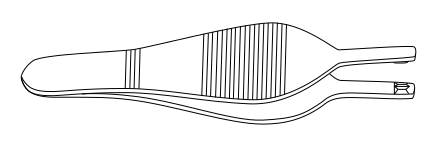
Fine short forceps with 1x2 teeth for atraumatic yet secure skin handling. The workhorse pickup in plastic, hand, and general skin closure.